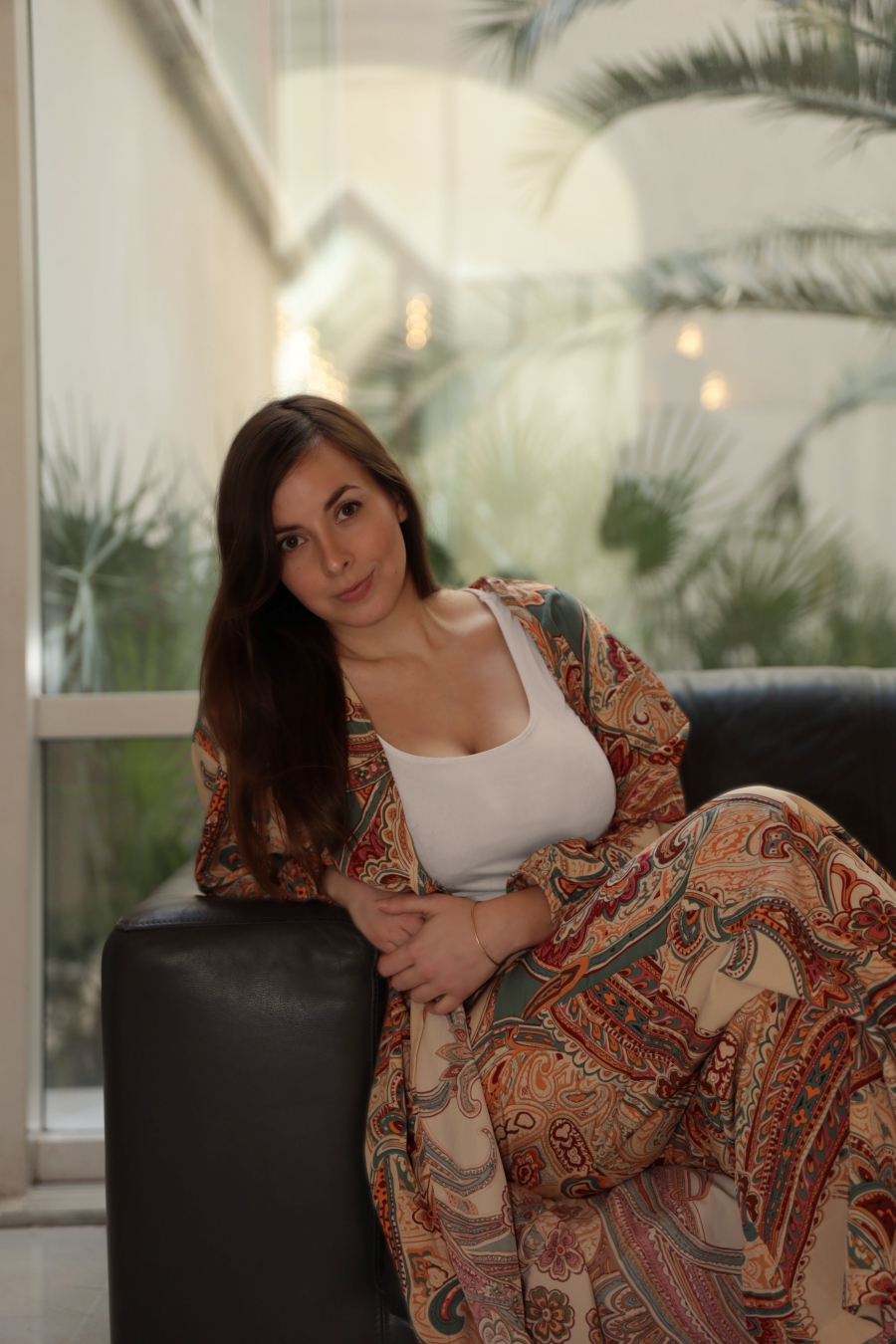
Artist Spotlight: Nita Asa
With humility and depth, Nita Asa reflects on a journey that’s as personal as it is public.
Upcoming 100: What initially inspired you to pursue a career in music, and how did you know it was the right path for you?
Nita Asa: Music has been part of my life since I was just three years old. That’s when I joined my first band, the Baby Jazz Band, once recognized as the youngest jazz band in the world. The project aimed to teach music as if it were a native language—and that’s exactly how it felt. Sometimes I believe I express myself better through my songs than in regular conversation. Music lets me say what words alone can’t. There have been many moments in my life where I truly feel music saved me. I don’t know where I’d be without it. I don’t see music and art as a career—they are my life. I simply can’t imagine doing anything that doesn’t involve them.
Upcoming 100: Can you describe your musical journey so far, and the key milestones or achievements that have led you to this point in your career?
Nita Asa: I believe my personal experiences have deeply shaped my musical voice and style. I started composing when I was just nine years old and haven’t stopped since. One key moment was when I dared to share my songs publicly for the first time. I realized people genuinely connected with my work—even though my style wasn’t very commercial at the time. Later, I learned how to adapt my sound when needed, especially for clients who preferred more mainstream music.
Meeting Jacobo Calderón in Spain was another major milestone. He believed in my music, particularly because it was alternative and niche. I truly believe that deeply personal, alternative music will resonate more than ever in the years to come. People are craving authenticity and humanity—and that’s something Jacobo and I agreed on. He invited me to record and release an album last year called Bid For Freedom, a collection of songs, each telling its own story. It was produced with the incredible Jacobo Calderón, Adrián Ghiardo, and Kazem Fahmi.
Some of those tracks had been waiting years to be finalized. And honestly, it felt incredibly healing to finally release them. I’ve never been one to follow trends—in fact, I often go in the opposite direction. Instead of dedicating all my energy to promoting the album, I felt a sense of closure after releasing it. That’s when I decided to move forward with two new projects focused on supporting human creativity in the age of AI: HArt (100% human artistry) and SecretSelf, an interactive art store I plan to expand into music in the near future.
Upcoming 100: How would you differentiate your sound or style from other artists in the industry, and what makes your music unique?
Nita Asa: I would differentiate my sound and style by its authenticity and emotional depth. Unlike many projects today that rely on generative music platforms, I write songs that come from real-life experiences—mine or others’. A machine could never write a song like “Days with Her”, which tells the story of a singer who starts her career full of hope and slowly loses her innocence through the harshness of the music industry, especially due to one man. She ends up strong, cold, and alone—spending her nights with lovers but her days with music.
I know countless women artists who have lived this story. The cruelty and misogyny in the artistic world have affected many of us. We move forward, but often with thicker skin each time. That’s something no AI could ever capture in a melody or lyric.
What makes my music unique is that inspiration comes to me in unexpected forms: a phrase, a leitmotif, an image, an emotion I’ve never felt before, or someone else’s story I absorb and turn into a powerful message. That’s how songs like “The Hole in My Temple” and “Come Home Raquel” were born. I enjoy blending styles—even languages—in a single song, like in “Bastards of Reason” or “Wanderer”. I simply follow what I feel, not what I’m told. Unless someone pays very well—haha. But even then, I remain true to my artistic intuition.
Upcoming 100: How do you balance the demands of creating new music, promoting your work, and building a fan base as a new artist?
Nita Asa: Not very well, to be honest. I’d love to have someone handling that side of things for me. Marketing and social media take up a lot of energy—energy I feel should be focused on creating. When I can afford it, hiring someone to support me with that will be one of my first investments. Still, I wouldn’t delegate it 100%, because I genuinely enjoy connecting with the audience that listens to and shares my songs.
Upcoming 100: What role does social media play in your music career, and how do you use it to connect with fans and grow your audience?
Nita Asa: I think it plays an important role—but it’s not everything. Social media is key for visibility, but nothing replaces real-world connection. Lately I haven’t been very active offline, but I plan to change that. Live shows, festivals, rehearsals—those moments matter.
I remember once having a concert in Barcelona, and someone who’s very active on my social media showed up with his partner and a friend. He’s always supported my work online, and seeing him there, so enthusiastic, was honestly beautiful. Meeting a fan who truly feels and understands what I try to express through my songs—that kind of connection happens out there, in the real world.
Upcoming 100: Tell us about your creative process when writing and producing music, and how you refine your songs until they're ready for release.
Nita Asa: My strengths are lyrics and musical composition. When it comes to mixing and mastering, I usually seek the help of specialists. I typically begin with a sketch—lyrics and melody—using guitar or piano. Then I build a digital demo with the core instruments, to shape the musical mood and tone. Once the lyrics are refined, I record a reference vocal.
I often stay in this stage for a while before moving into a professional studio, where I work with musicians and a sound engineer to record the final version.
For film and multimedia projects, I usually work solo in my home studio. I rely on visual or musical references—or the scene itself—for inspiration and direction.
Upcoming 100: How do you handle the challenges of breaking into the music industry, such as gaining exposure, securing gigs, or getting your music heard by the right people?
Nita Asa: It’s not easy for me, honestly. I’m an artist who dreams of reaching thousands of people, yet I’m also an introvert with a bit of a hermit soul—so I don’t make it easy on myself, haha. Features like this one help a lot in terms of visibility, but in the end, it comes down to how much you hustle: sending your music to the right channels and people who might genuinely connect with what you do.
The hard part is getting someone to even read your message, especially when they receive a hundred a day—or have someone else managing their inbox. Sadly, we’re still living in a world where who you know often matters more than what you do. Still, I believe landing interviews and getting your work in front of influential people and media outlets is a key step.
Upcoming 100: Can you discuss your experiences working with producers, musicians, or other collaborators, and how these partnerships have contributed to your growth as an artist?
Nita Asa: When I lived in Argentina, I was surrounded by professionals from the IASJ (International Association of Schools of Jazz). I met many producers and musicians who encouraged me to keep composing and highlighted the uniqueness of my style. I’ve shared music with artists in places like Woodstock, Boston, New York, and Los Angeles, and I’ve learned a lot from them—even though I haven’t had the chance to perform my own songs live in the U.S. yet.
Working and producing with Jacobo Calderón in Spain was a key experience. He’s produced music for major names like Disney, Miley Cyrus, David Bisbal, and Alejandro Sanz—and his father composed most of Luis Miguel’s albums. With Jacobo, I became even more aware of the transformations we’re going through as artists and composers. It was also a cathartic process.
We worked together with top producers Adrián Ghiardo and Kazem Fahmi. It was a creative, artistic, fun, and healing collaboration for me. It was exactly the closure I needed for this album: to finish it in the company of people I admire deeply. I’m truly grateful.
Upcoming 100: How do you stay motivated and focused on your goals as a new artist, especially during times of rejection or setbacks?
Upcoming 100: How do you stay motivated and focused on your goals as a new artist, especially during times of rejection or setbacks?
Nita Asa: I won’t lie—it’s not easy. I don’t think it is for any artist. I’m a very sensitive person and, as I mentioned before, quite introverted—even if that’s not what you see when I’m on stage. But I do a lot of inner work to keep moving forward, because one thing is absolutely clear to me: music isn’t going anywhere. So I need to stay present and strong—for her.
Upcoming 100: How do you navigate the balance between staying true to your artistic vision and adapting to the expectations of the music industry?
Nita Asa: I’m very flexible—and as a good storyteller, when the motivation isn’t naturally there, I invent it. There’s always something to hold on to and work from. In my case, you’ll often find different versions of the same song. Right now, for example, I’m working on a track called Ave Fénix. The original version is eight minutes long—yes, eight!—and I’m adjusting it to become a three-minute track or less.
But will the eight-minute version disappear? Not at all. That version has something the shorter one doesn’t. There’s a reason why it lasts that long—and that’s where the art lives. From art to commercial product, of course there are adjustments.
But I do have my limits. Some things are non-negotiable. For example, I would never write songs that promote the devaluation of women—even if someone offered me a million dollars.
Upcoming 100: Can you share a valuable lesson you've learned during your journey as a new music artist, and how it has impacted your approach to your career?
Nita Asa: As a woman in the music industry, learning how to negotiate is essential—just as important as learning to say no, even if that means turning down professional opportunities. I dare say that most women in this field have faced situations where a man in a position of power created obstacles or made us feel uncomfortable.
Don't fall into desperation and say yes to everything—especially if it threatens your integrity or dignity. If something doesn’t feel right, walk out of the room with your head held high and don’t look back. But don’t quit. There will be other ways. It might take longer, yes—but you'll live in peace knowing you protected yourself and your art.
This is your career, on your terms, darling. Also, learn to say yes when a good opportunity shows up. And negotiate until you're satisfied—because your work is worth it, and you, as an artist, are worth it. The time and energy you put into creating and studying are immeasurable. Others might not always realize it—but you and I do. Value your work.
Upcoming 100: How do you handle criticism or negative feedback on your music, and how do you use it to improve your craft while maintaining your self-confidence?
Nita Asa: When it comes to creative opinions, as my grandmother used to say, “I lift my leg and let it pass.” The creative realm is my kingdom—and there, I make the rules.
Now, when it comes to technical advice or tools that can improve the quality of my work, I always listen carefully. I’m eager to grow.
If it’s a project for a client—like a film soundtrack, a song for a series, or for another artist—I take in all the feedback they give me and then translate it into my artistic language to offer them a refined result. After all, I like to believe they hired me because they trust my creative judgment.