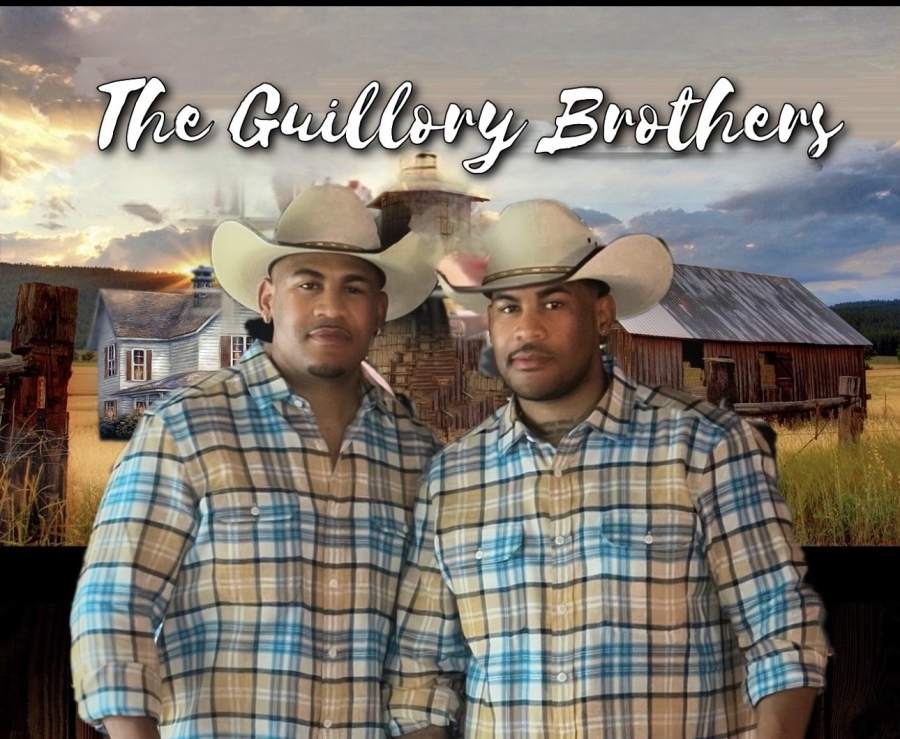
Artist Spotlight: The Guillory Brothers
Twin brothers Bervick and Benjamin, known as Double Trouble Zydeco, have transformed their personal trials and deep Louisiana roots into a powerful musical journey. Growing up in Mallet, Louisiana, they were surrounded by Zydeco’s vibrant rhythms, eventually becoming the first set of identical twin accordion players in the genre.
In this exclusive Upcoming 100 interview, the brothers open up about their early struggles, their artistic process, and their commitment to preserving and expanding Zydeco’s legacy. They reflect on how music became their way out of hardship, the influences that shaped their sound, and their vision for the future.
Upcoming 100: What inspired you to pursue a career in music, and how did you initially discover your passion for creating music?
Bervick (Twin 1): To be honest, I haven’t been in trouble like that… but Benjamin has. I remember it like it was
yesterday. My brother—at just 13 years old—was sentenced to juvenile life. In and out of trouble. He wasn’t a thief or a drug dealer. He was one of those people who didn’t go looking for trouble… but if you crossed him, it could be dangerous for you. He stood on family. He was well respected. Hung with those who were heavy in the streets. How can a 13- or 14-year-old kid have that kind of respect?
His first six months… man, it was hard. We couldn’t see him. Couldn’t talk to him. Didn’t even know if he was okay. That hurt our mom deeply. But he learned… music really saved him.
Benjamin (Twin 2): (laughs) Really, bro? Yes… I was in and out of trouble as a kid. I’ll admit—I was lost. Without a
father in the home, I was always searching for something. My mom did the best she could. But those whippings didn’t phase me—I was a knucklehead. Hung out with the wrong crowd, just running wild. I was being groomed.
I remember once, riding in the car with some older dudes. One of them turns to me and says, ‘Hey Ben, you wanna see what happens to people who owe me money?’ I’m looking around, confused, then they all jump out of the car with AK-47s. The last thing I heard was: ‘TIME TO RELEASE THESE DEMONS!’ So many shots rang out—I was holding my ears, shaking. That’s all I’ll say…
When you’re young, you look at that like it’s power. But that ain’t power. Another time, I was with a group—five of us. Two in the front, three in the back. One dude arguing with his girlfriend forgot to take the drugs out of the secret compartment. Definitely a setup. Long story short—I was the youngest. So I took the charge. If I hadn’t, the adults would’ve faced serious time. From the shooting to the drug bust, I was the one identified. That became my charge. I remember the judge looking at me and saying: ‘You again, huh?’ ‘I’m going to make an example of you.’ ‘Benjamin—I sentence you to juvenile life! And 1 year in adult prison.’ I was 13 years old. At 18, I would’ve been transferred to full prison. That broke my mother. She worked two jobs, paid lawyers… eventually got a deal, but I still had to remain with the state. I was basically stationed in Baton Rouge, LA. Every day I took the bus to Opelousas for school, then back to lockdown at night. My mom and Bervick would come see me during school, bring me food… Eventually I came home, but it was house arrest. I had a tracker and had to report to someone daily.
While I was locked up, I faced three attempted murder charges for self-defense—and beat all of them. But man… they tell you when to eat, sleep, use the restroom—or get beat. The living conditions were horrible. Prison for juveniles is just as wild—gangs, predators, drugs. Even the guards be cool with it, helping these young dudes do dirt. I got sent to solitary confinement so many times. Let me explain solitary: It’s a closet-sized cell, with a hole in the ground that looks like a toilet—dirty. You’re locked in there 22 to 24 hours a day, no human contact. They say it’s for protection or punishment. But it messes with your mind. I was in there for protecting myself—guys trying to take your food—it’s survival. I’ve seen people get brutalized. Guys who couldn’t or didn’t fight back… ‘STOP! COME ON MAN! LEAVE ME ALONE! HELP! SOMEONE HELP!’ Screams you never forget. Horrific. Traumatic. You learn real quick to mind your own business. I told myself: ‘I’m not going out like that. Somebody would have to kill me first.’
That’s why I ended up staying in solitary. But you know what? That might’ve been the best thing for me. Because I met God there. I had one friend in there—his name was Josh, but they called him Spunk. Man, he was smart—brilliant with cars. Could tell you anything about an engine. Just a product of his environment. We watched each other’s backs. I remember when it was time for me to leave… I was walking to meet my mom and brother at the gate. But… I couldn’t tell Josh goodbye. He’d stolen from the wrong people. He was raped and killed the day I left.
That broke me. I cried. My mother just held me and said: ‘Son, you have a calling on your life. You survived this. I’m sorry about your friend. It’s over now.’ But it wasn’t over for me—not mentally. I couldn’t sleep. Jumped in my sleep. Nightmares. Didn’t trust people. I liked being alone. My mom could tell I was struggling to adjust. She just kept praying and holding my hand every step of the way. I survived, no harm done, but I was challenged mentally. By the grace of God, it got easier. Music saved me. People take so much for granted. Freedom is everything. Now, I teach my kids, nieces, nephews, cousins: ‘Trouble is easy to get into… but hard to get out of.’
Upcoming 100: Can you describe your artistic process, from conceptualization to completion?
Bervick (Twin 1): We got our start in Zydeco music—the heartbeat of Southwest Louisiana. Zydeco is upbeat,
soulful dance music, born from Creoles of color—African, French, and Spanish descent. It’s all about rhythm, movement, and spirit. Key instruments include accordion, rubboard, bass, drums, guitar, and synth keyboards. Zydeco blends blues, R&B, Cajun, gospel, and soul—sometimes hip-hop and reggae. It’s sung in English, French, and Louisiana Creole, telling real-life stories through music.
We’re identical twins, born in Mallet, Louisiana—deep in Zydeco country. Our father and grandparents surrounded us with this music, and we’re related to legends like Roy Carrier, Dikki Du, and Grammy-winner Chubby Carrier. At 14, I got my first accordion for Christmas, taught myself to play, and made a promise to God to stay out of trouble. I taught Benjamin, making us the first set of identical twin accordion players in Zydeco. Our mom called us ‘Double Trouble Zydeco,’ and our first band was born. Our debut album, The Road to Zydeco Extravaganza, sold over 3,000 CDs without any streaming platforms. We’ve stayed true to the roots while pushing the sound forward, inspired by artists like Buckwheat Zydeco, Beau Jocque, Boozoo Chavis, and our mentor Lil Jeff Boutte. I write when inspired, but Benjamin? He’s a music machine. He writes, produces, performs daily. We have 12 Zydeco albums, 40+ country tracks ready, and he’s even published a children’s book, You Are Tougher Than You Think. Before meeting Tina Terry from Tina Terry Agency—now our billing manager—we handled all bookings, promotions, and merchandise ourselves. That experience sharpened us.
Upcoming 100: Your style seems to be a unique blend of various influences. How have these influences shaped your artistic identity?
Benjamin (Twin 2): Our style comes from all the sounds we grew up on—family music at home, country, Zydeco,
blues, hip-hop, and soul. Each influence left a mark. Over time, I realized I didn’t have to pick just one lane—I could blend them authentically. Growth never stops. We constantly listen, collaborate, experiment, and let life shape our music. Every phase adds a layer to our identity.
Upcoming 100: How do you balance creative vision with appealing to a wider audience?
Benjamin (Twin 2): Balancing authenticity with audience appeal is tough. We start by staying true to our sound,
message, and story—that’s what connects with people. At the same time, we experiment, collaborate, and adapt without diluting our essence. It’s about creating art that’s true to us while inviting others along the journey.
Upcoming 100: How do you use social media to connect with your audience?
Bervick (Twin 1): Social media was hard at first—we’re not online every day. But it’s essential for building
connections and sharing our journey. Now, we have a team to manage posts and engagement. We keep it authentic, giving fans a real look at who we are, not just as artists but as people.
Upcoming 100: What’s your experience with collaborations?
Benjamin (Twin 2): We haven’t collaborated much yet but are open. Collaboration is more than performing—it’s sharing ideas, co-writing, and creating something fresh. Artists we’d love to work with? George Strait, Morgan Wallen, Jelly Roll, Keith Urban, Tim McGraw, Sade, K. Michelle, Beyoncé. Fun fact: we wrote songs with Beyoncé in mind. One became our first single, Pass the Bottle. That moment told us: this is our time.
Upcoming 100: How do you manage finances while pursuing music?
Bervick (Twin 1): Our father always said, ‘It’s a sin not to work.’ We’ve always worked hard, putting priorities first
and music second. Staying grounded, praying for wisdom, and being patient keeps us sustainable and on the right path.
Upcoming 100: How do you handle criticism or negative feedback?
Bervick (Twin 1): Criticism is part of the journey. Early on, someone said our sound was ‘too different.’ It stung,
but we realized that difference is our strength. That feedback pushed us to refine our craft, leading to Pass the Bottle. We take what’s useful and leave the rest—standing out is better than blending in.
Upcoming 100: Music as a tool for social change—how do you address important issues?
Benjamin (Twin 2): Music is a voice for the people. We share our experiences, struggles, and hope. Sometimes it highlights our culture, sometimes universal struggles. Our goal is simple: you’re not alone, your story matters. If our music uplifts, inspires, or brings hope, we’ve done our job.
Upcoming 100: What advice would you give to aspiring artists?
Benjamin (Twin 2): Stay true to yourself. Don’t chase trends. Authenticity lasts. Be patient, resilient, and surround yourself with believers. Remember why you started—passion carries you through setbacks and
makes victories sweeter. Your story is unique, and the world needs to hear it.